
Resources
Blog
Radioactive Waste Management: Containers & Compliance in Nuclear Medicine
Nuclear medicine generates roughly 90% of all hospital radioactive waste, yet most departments treat waste disposal as an afterthought. Under NRC 10 CFR 35.92 (and equivalent IAEA / national regulations), short-half-life waste (Tc-99m, F-18, Ga-68, I-131, Lu-177) can decay in storage for a minimum of 10 half-lives, then be surveyed at the unshielded surface and released as ordinary trash — provided every radiation label is removed. This guide walks through the four waste streams in a typical NM department (solid syringe/vial waste, liquid waste, sealed-source returns, volatile I-131), the container spec each stream needs (shielded, leak-proof, color-coded, dated), the half-life segregation principle that keeps Tc-99m from "contaminating" a Lu-177 barrel, the weekly survey-and-release workflow, and the enforcement traps that have cited real departments. We also map APEX shielded waste pots, lead-lined barrels and decay-in-storage cabinets to each waste stream.
PET Radiopharmacy 101: Equipment for FDG Production & Dispensing
[18F]FDG is the most-produced radiopharmaceutical on Earth, and every PET radiopharmacy — whether attached to a cyclotron or dispensing commercial doses — runs the same chain: cyclotron irradiation of oxygen-18 enriched water, automated nucleophilic synthesis in a shielded hot cell, cGMP QC on a 110-minute clock, and sterile dispensing in a Grade A isolator. This guide walks through the equipment at each step: the 16 MeV biomedical cyclotron with its niobium O-18 target, the synthesis module (TRACERlab, FASTlab, F300 class), the 40–50 mm lead-shielded hot cell, the automated dispenser, the dose calibrator, and the QC bench (radio-TLC, HPLC, gamma spectrometer, pH, endotoxin, bubble-point). We cover the FDG QC specification table — visual, pH 4.5–7.5, radiochemical purity >90%, residual Kryptofix ≤50 µg/mL, endotoxin <175/V EU/mL — and the 511 keV shielding physics that drives every wall thickness. APEX supplies the 511 keV shielding layer: 50 mm Pb PET L-benches, 8 mm tungsten syringe shields, 30 mm Pb vial shields and Type A shipping containers.
ALARA in Practice: Designing a Nuclear Medicine Hot Lab Workflow That Actually Protects Staff
This practical guide translates the ALARA (As Low As Reasonably Achievable) principle into an operational workflow for nuclear medicine hot labs. We cover the three-zone layout — hot dispensing, warm calibrator staging, and cold decay storage — and the nine-step receive-to-dispose chain that keeps technologists out of the line of sight on every draw. We map the equipment layer that closes the loop: L-blocks and L-benches, lead and tungsten vial shields, mmPb-matched tungsten syringe shields, long-handled shielded carriers, lead apparel, and lockable decay-in-storage waste pots. We then specify the dosimetry program — whole-body badge, non-dominant-hand ring badge, eye-lens dosimeter and electronic personal dosimeter — that reveals which workflow step actually drives extremity dose, and pin the design against the ICRP limits of 20 mSv whole body, 500 mSv extremity and 20 mSv eye lens per year. A quarterly ALARA audit checklist closes the loop for radiation safety officers and hot-lab managers.
Downloads
Hot Cell Catalog
45.6 MB
Complete catalog of our hot cell product line — available configurations, options and technical specifications for planning your radiopharmacy.
Radiation Protection Product Catalog
81.2 MB
Catalog covering our radiation protection equipment and shielding materials, with specifications to support planning and procurement.
Measurement and Monitoring Catalog
12.5 MB
Catalog of our radiation measurement and monitoring instruments, with specifications and application references.
Case Studies
Regional Nuclear Medicine Center — Full Facility Build-Out
Read case study →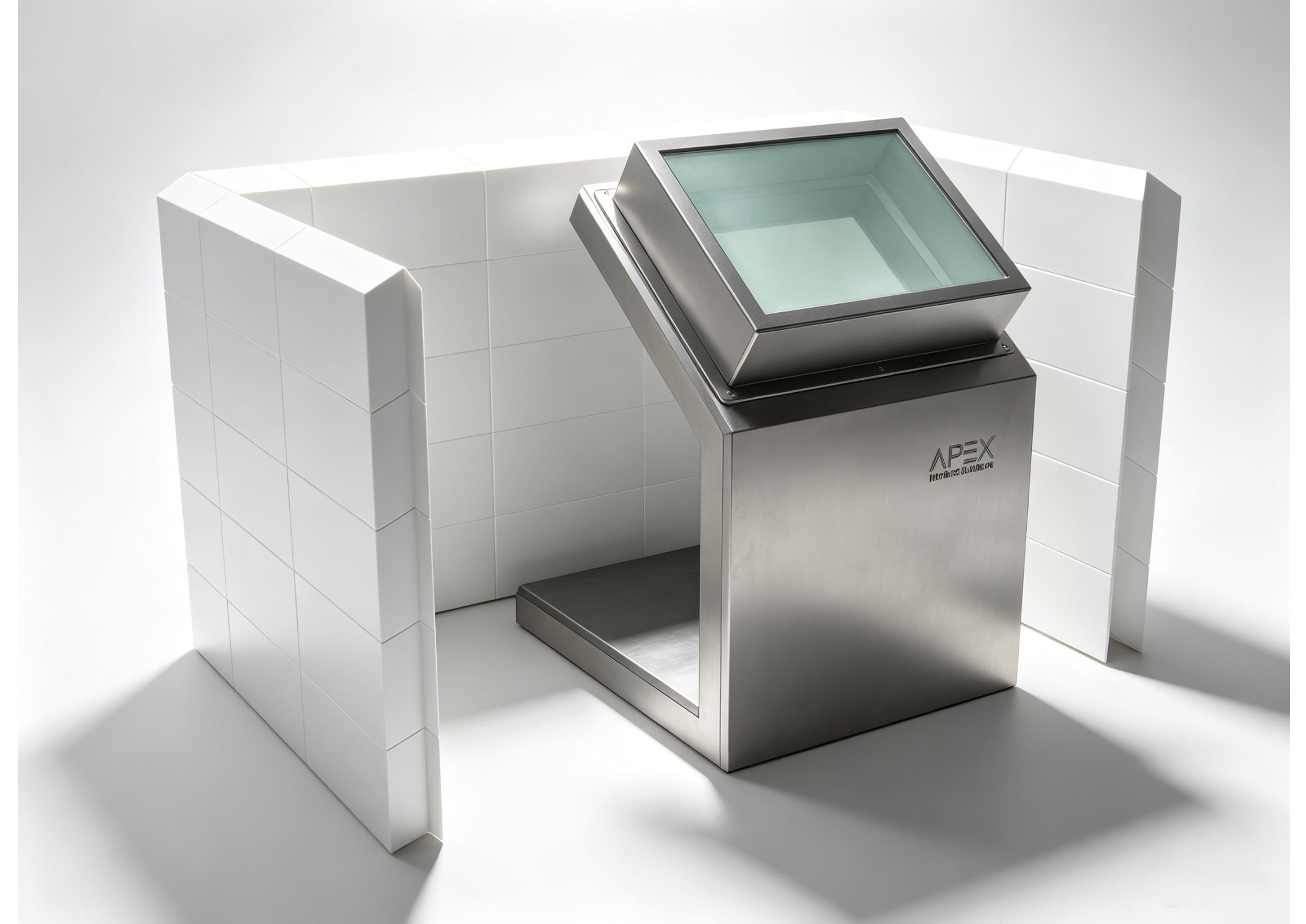
Custom Shielding Package for a Nuclear Medicine Hot Lab: L-Block Shields and Interlocking Lead Bricks
This case study documents a custom radiation-shielding package delivered under the APEX brand for a nuclear medicine (radiopharmacy) operation. The customer required operator protection at the vial- and syringe-handling station, together with a reconfigurable barrier around the preparation work zone.
Read case study →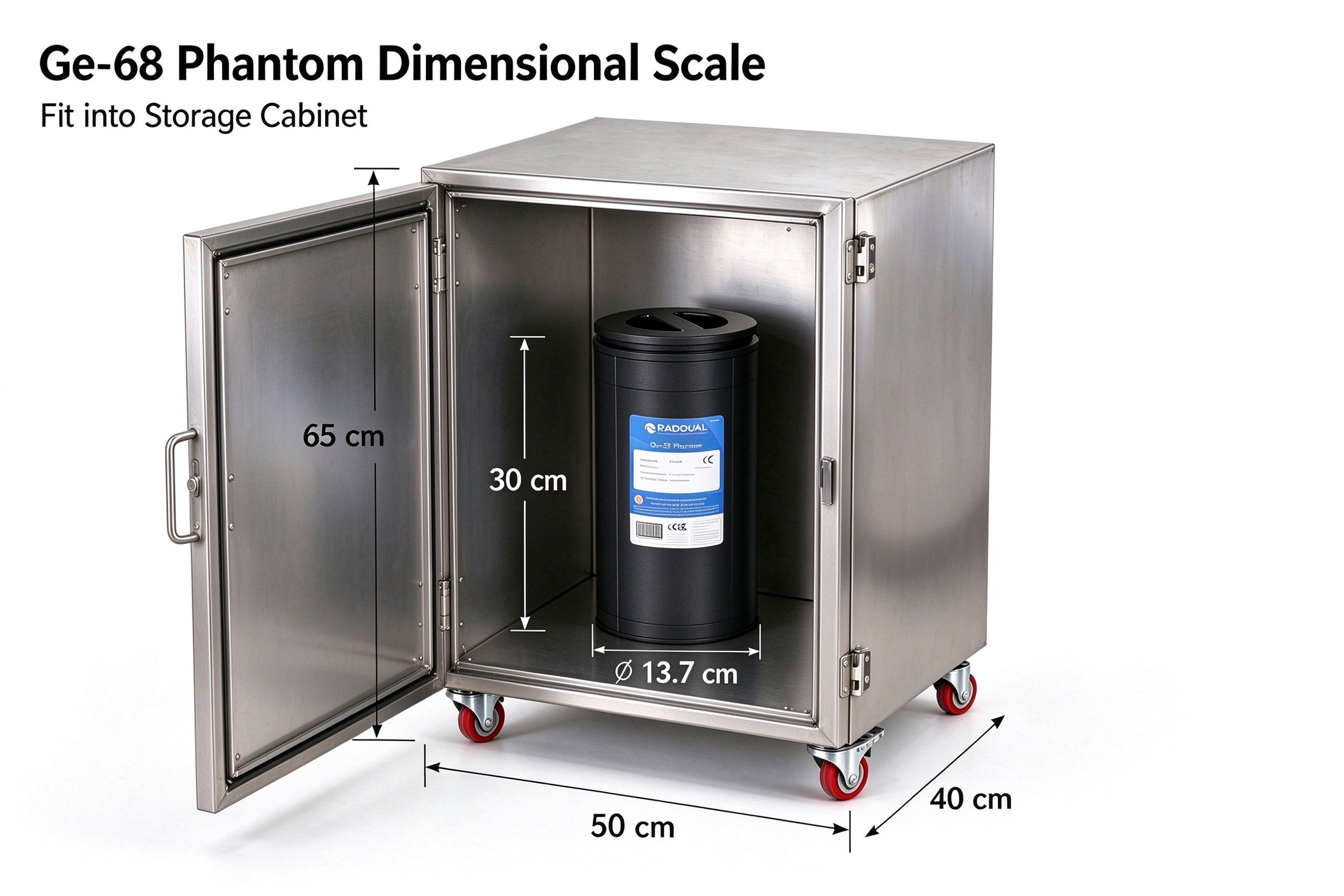
Custom-Shielded Storage Cabinet for Ge-68 PET Phantom
Precision sizing, rapid engineering and equal-scale technical drawings for a European radiopharmaceutical customer
Read case study →FAQ
Yes. APEX has extensive experience supporting government procurement projects. We assist with bid documentation, technical compliance review, specification alignment, and quotation preparation to help you submit a complete and competitive tender.
Standard catalog products typically ship within 3-4 weeks of order confirmation. Custom-engineered products depend on complexity — typically 4–10 weeks including engineering, manufacturing and QC. Our China-based manufacturing ecosystem and direct factory relationships allow us to keep lead times shorter than typical Western suppliers. Exact schedules are confirmed at quotation.
Yes. We provide hands-on support for product registration, documentation preparation, and liaison with regulatory authorities. We also offer compliance guidance for radiation safety, cGMP, and packaging requirements relevant to your market.
Standard product warranties cover manufacturing defects under normal use; warranty periods are stated in the quotation and order confirmation. Custom-engineered products carry the same warranty commitment. Please contact us for the specific warranty terms applicable to your order.
Yes. Depending on the size and complexity of your project, we can assign dedicated technical personnel to provide on-site operational guidance, installation supervision and commissioning support — ensuring your hot cells, shielding and monitoring systems are installed correctly, validated, and running as planned. For smaller orders, we provide remote technical support and detailed installation documentation.
We offer flexible international trade terms — including EXW, FOB and CIF — and work with our logistics partners to arrange air or sea freight to your destination. Shipping costs, insurance and import duties are quoted transparently per project, and we provide the export documentation required for customs clearance.
All products are securely packaged for international freight: lead and tungsten components are protected against shock and moisture, stainless steel frames are protected against surface damage, and glass/lead-glass components are cushioned and clearly marked. Heavy items (L-blocks, storage containers, hot cells) are shipped on pallets or in reinforced crates suitable for air or sea freight, with packing lists and documentation provided.
Yes — this is our core service. We combine hot cells, radiation shielding, monitoring systems, transport containers and associated equipment into one integrated procurement package: one proposal, one quotation, one accountable partner. We support government procurement and public tender projects as well, including bid documentation and technical specification alignment.
MOQ depends on the product. Standard catalog items such as lead aprons, vial shields and syringe shields can generally be ordered in single units; custom-engineered items (hot cells, custom screens, transport containers) are quoted per project.
It follows a clear, structured path: (1) Requirement definition — you share your application, facility layout, isotope, activity and any drawings; (2) Proposal — our engineers confirm technical feasibility and provide a quotation with specifications; (3) Manufacturing — products are produced to the agreed specification; (4) QC & release — each item is checked against the agreed specification before shipment; (5) Delivery & support — we coordinate shipping and provide technical support through installation and acceptance.